Use warm water, a brush or sponge, and a little dish soap if needed. Dry the skillet completely. Wipe a very thin layer of cooking oil onto the surface before storing if the pan needs it. That's the routine.
After dinner: wash, dry, put away
- Let it cool enough to handle safely.Don't bring a dangerously hot pan straight to the sink or put cold water in it.
- Wash away the food.Use warm water and a brush, non-scratch pad, or a small amount of mild dish soap. Soap does not automatically strip properly established seasoning.
- Dry it thoroughly.Use a towel immediately. Briefly warming it over low heat can drive away remaining moisture; switch the burner off once dry and never leave a heating pan unattended.
- Oil only as much as needed.Wipe on a thin coat of neutral cooking oil if the surface looks dry, then buff away excess. You should not see puddles or sticky patches.
- Store it dry.Keep moisture away from the cooking surface and from pans stacked above it.
When food gets stuck
Start with a scraper or stiff brush. If residue is stubborn, a small amount of warm water can help loosen it; some manufacturers recommend briefly simmering water. Coarse salt or a suitable chainmail scrubber can help with stubborn deposits, but don't treat an aggressive abrasive scrub as the first step after every meal.
Scrub until you remove the food rather than automatically stripping the pan down to bright metal. Afterwards, rinse, dry thoroughly, and refresh the oil film if the pan needs it.
When the pan needs more than a rinse
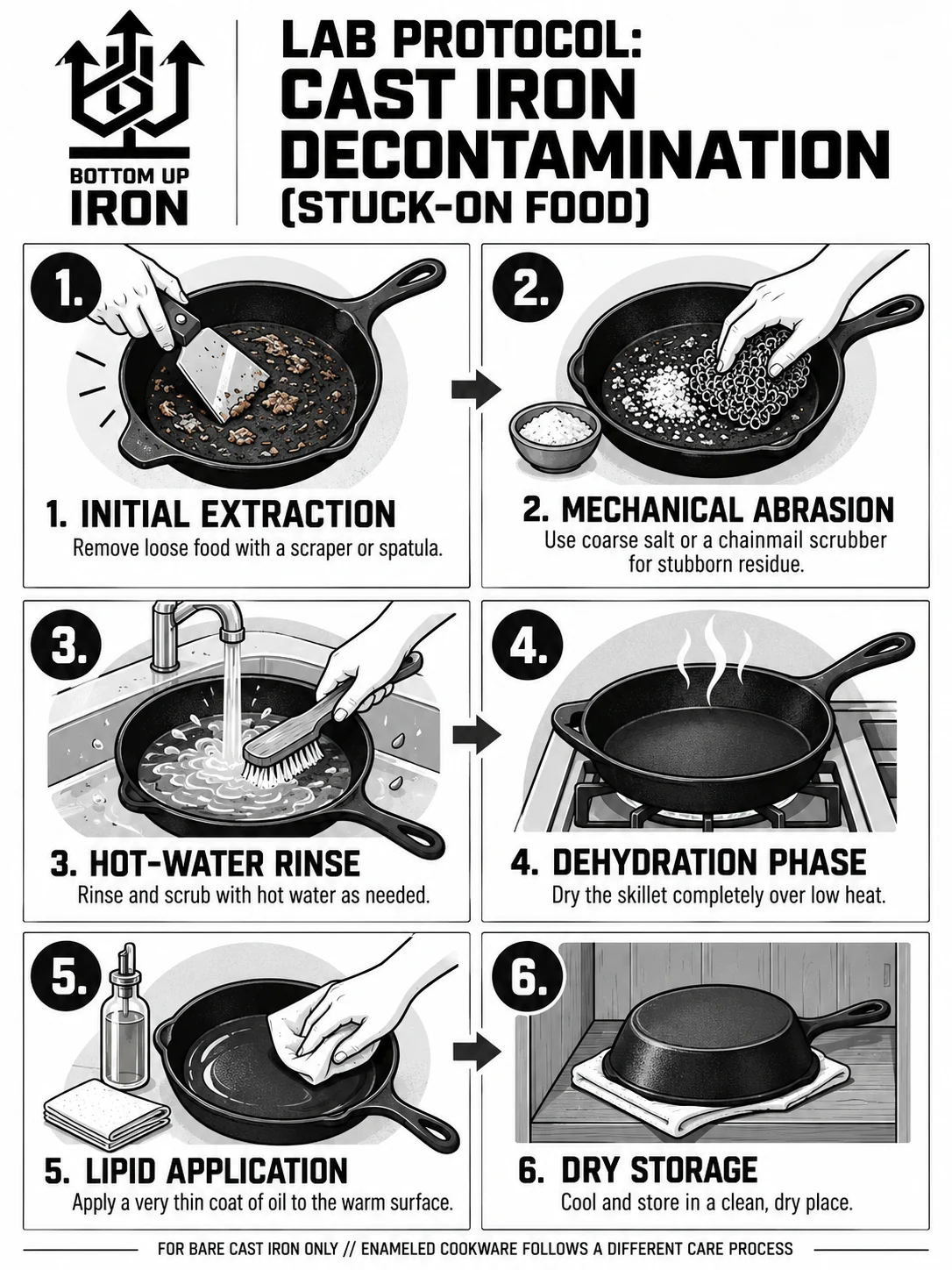
The illustration uses workshop terminology, but the job is everyday kitchen maintenance. If ordinary washing removes the food, you don't need every stage each time.
Seasoning, sticky oil, and rust
What seasoning is
Seasoning is a bonded layer formed when thin films of cooking oil are heated on bare cast iron. It protects the iron and helps with food release. It is not the same thing as leaving a thick layer of raw oil on a pan.
Why a skillet feels sticky
Often, too much oil was left behind during seasoning or storage. Clean away tacky residue and return to thin, thoroughly wiped coats. More oil does not automatically produce better seasoning.
What to do about rust
Small rusty spots usually aren't a reason to discard a bare cast-iron pan. Remove the rust with an appropriate pad, wash, rinse, dry completely, and restore seasoning where it was damaged. Follow the manufacturer's care instructions for extensive rust or unusual finishes.
If the cooking surface is covered in enamel — including matte black enamel — use the enameled Dutch oven guide instead.
Common questions
Can I use dish soap?
Yes. A small amount of modern mild dish soap is suitable for routine cleaning of well-seasoned bare cast iron.
Should I leave the pan soaking overnight?
No. Extended soaking encourages rust. Loosen residue, wash, then dry promptly.
Is every smooth skillet enameled?
No. Some bare cast-iron skillets are machined after casting to create a smoother cooking surface. They still require bare-cast-iron care. See polished vs. regular cast iron.
Do I need to season after every wash?
Not necessarily. Routine cleaning and a light oil wipe are different from oven seasoning. Reseason when the protective layer is damaged or after rust removal, rather than automatically after every meal.
Sources and further reading
These general care recommendations are informed by Lodge's cleaning guide and its cast-iron troubleshooting reference. They are not presented as results of a BUI laboratory experiment.